 русский
 Français
 日本語
日本語 বাংলা
বাংলা 한국어
한국어 Tiếng Việt
 Latine
 ไทย
ไทย عربى
عربى Hrvatski
 čeština
 dansk
dansk Nederlands
 Suomalainen
 Pilipino
 Deutsch
 Magyar
 Indonesia
 فارسی
فارسی italiano
 Bahasa Melayu
 Gaeilge
 norsk
norsk Português
 Polskie
 Română
 Slovák
 svenska
 Türk
Türk
+86-13777012108
(WhatsApp/WeChat)
Petak navečer na kvartovskom terenu, pola igrača prestaje dolaziti. Dalji koš je u sjeni, rasv......
READ MORE
To choose the best LED garden light, focus on five key factors: brightness (lumens) matched to the application, IP waterproof rating of at least IP65, colour temperature suited to the garden's aesthetic, energy efficiency measured in lumens per watt, and build quality including housing material and corrosion resistance. LED garden lights are the clear choice over traditional incandescent and fluorescent alternatives — they contain no mercury or lead, consume significantly less energy, and maintain stable luminous output for tens of thousands of hours in outdoor environments. The right model depends on whether you are illuminating pathways, accentuating plants, providing security lighting, or creating ambient atmosphere.
Before comparing individual products, it is worth understanding why LED technology is categorically superior to other light source options for garden use — a foundation that makes the selection process more straightforward.
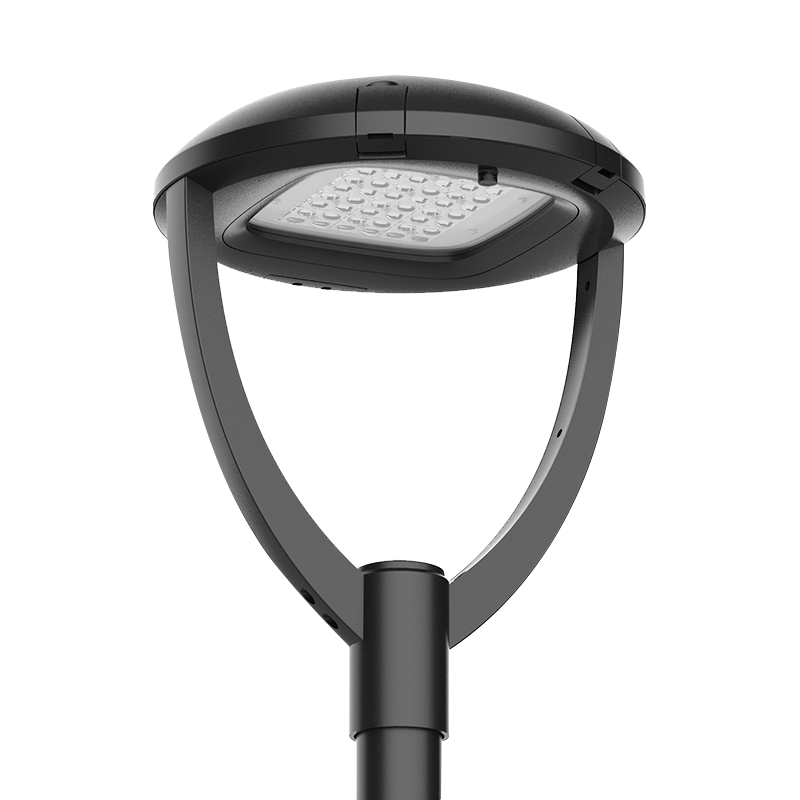
Brightness — measured in lumens (lm), not watts — is the most important specification to match to your garden lighting purpose. Choosing a light that is too dim fails to illuminate the area, while excessive brightness creates glare that disrupts the garden's atmosphere and disturbs neighbours.
| Application | Recommended Lumens | Typical LED Wattage | Mounting Type |
|---|---|---|---|
| Pathway / step lighting | 50–150 lm | 1–3 W | Spike / bollard |
| Plant / feature uplighting | 150–400 lm | 3–8 W | Spike / ground flood |
| Seating / patio ambience | 200–600 lm | 5–10 W | Wall / post / bollard |
| Driveway / entrance | 700–1,500 lm | 10–20 W | Post / wall floodlight |
| Security / area lighting | 1,500–5,000 lm | 20–50 W | Wall floodlight / PIR |
For most residential garden lighting schemes, a mix of lower-output pathway and feature lights (50–400 lm) creates the most attractive result — bright enough for safety and visual interest without overpowering the garden's nighttime character.
The IP (Ingress Protection) rating is a critical specification for any garden light, defining how well the fixture is sealed against water and dust entry. LED garden lights — by using special sealing materials and structural design — effectively prevent moisture and dust from entering the lamp interior, ensuring stable operation across all weather conditions. Understanding IP ratings helps buyers select a light that will genuinely withstand its intended environment rather than failing within the first winter.
The IP code consists of two digits: the first (1–6) rates dust resistance; the second (1–9) rates water resistance. For garden lighting:
Colour temperature, measured in Kelvin (K), determines whether the light appears warm, neutral, or cool — and is one of the most important aesthetic choices in garden lighting. Unlike indoor lighting where personal preference is the primary guide, garden lighting colour temperature also affects how plants and natural materials appear at night.
For gardens where both atmosphere and function matter, using 2,700K–3,000K warm white for decorative and pathway lights combined with 4,000K for security or driveway lights provides the best of both requirements without compromise.
Lumens per watt (lm/W) is the efficiency metric that indicates how much visible light a fitting produces for each watt of electricity consumed. Higher lm/W values mean more light for less energy cost. This specification is particularly important for garden lights that run for many hours each night, where even modest efficiency differences accumulate into meaningful electricity savings over a full year.
As a reference point for comparison:
When comparing LED garden lights, an efficiency of 80 lm/W or above represents a reliable minimum quality threshold for modern LED products. Fixtures significantly below this figure may use lower-grade LED chips that also carry higher long-term failure risk.
Garden lights operate in one of the most demanding environments possible for any electrical product — exposed to rain, frost, UV radiation, temperature cycling, and potentially coastal salt air or garden chemicals. Build quality and housing materials directly determine whether a light lasts two seasons or ten years.
The front lens or diffuser protects the LED chip and shapes the light beam. Tempered glass lenses offer the best long-term optical clarity and UV resistance but add weight. Polycarbonate lenses are more impact-resistant but can develop surface hazing after several years of UV exposure, reducing light transmission. For spike lights and feature uplights where the lens faces upward and is exposed to direct sunlight, tempered glass or UV-stabilised polycarbonate are both acceptable choices.
The power source determines installation complexity, running cost, and the locations where garden lights can be placed. Each option has distinct advantages and limitations.
| Power Type | Brightness Potential | Installation | Running Cost | Best For |
|---|---|---|---|---|
| Mains 230V wired | Highest | Requires electrician; permanent cable | Electricity cost per unit | Security lighting, feature lighting, permanent installations |
| Solar powered | Low to moderate | No wiring required; spike in ground | Zero electricity cost | Pathway lighting, decorative accents, remote areas |
| Low-voltage 12V / 24V | Moderate to high | DIY-friendly; transformer required | Low electricity cost | Feature lighting, pathway systems, flexible garden schemes |
Solar LED garden lights are particularly suitable for pathway and decorative applications in open gardens with good sun exposure. However, their performance is inherently weather-dependent — in cloudy climates or shaded garden positions, solar lights may not charge sufficiently to operate through the full night, making low-voltage or mains-wired options more reliable for functional lighting needs.
Modern LED garden lights increasingly offer intelligent control features that improve convenience, energy efficiency, and security:
Understanding which light type suits each garden zone ensures that the overall lighting scheme is both functional and visually coherent.
Ground spike lights push directly into soil and are ideal for uplighting trees, shrubs, and architectural features. Their adjustable angle allows precise aiming, and their spiked base makes repositioning easy as the garden evolves. Choose models with IP65 or IP67 rating and a stainless steel or aluminium spike for long-term rust resistance.
Bollard lights stand at waist height and provide 360-degree illumination ideal for pathways, driveways, and garden borders. They combine functional path lighting with an architectural landscape element. Aluminium or stainless steel construction is recommended for bollards in exposed positions.
Surface-mounted on walls, fences, or gate posts, LED wall lights provide focused downward or upward illumination for entrances, seating areas, and building perimeters. Wall lights with PIR sensors are particularly effective for security without the energy waste of continuous operation.
High-output LED floodlights provide wide-area illumination for driveways, lawns, and building frontages. Modern LED floodlights achieve 120–160 lm/W efficiency at outputs from 10W to 100W+. Security floodlights with PIR sensors are the most practical choice for residential applications where floodlight-level brightness is only needed intermittently.
Flush-mounted into paving, decking, or lawn edges, in-ground lights create a low-profile, integrated look without visible light fittings above the surface. These require the highest water resistance ratings — IP67 minimum, IP68 for water feature surrounds — and robust tempered glass lenses to withstand foot traffic load.
Use this checklist when evaluating any LED garden light product to ensure it meets all critical requirements before purchase:
Petak navečer na kvartovskom terenu, pola igrača prestaje dolaziti. Dalji koš je u sjeni, rasv......
READ MOREAko ste uspoređivali svjetiljke, radna svjetla ili male svjetiljke, vjerojatno ste vidjeli 450......
READ MOREIskrena početna brojka je široka: kompletan projekt rasvjete terena za bejzbol obično košta iz......
READ MOREOdabir odgovarajuće rasvjete za košarkaški teren svodi se na jedan zaključak: LED reflektori p......
READ MORE
Naši proizvodi
Ostanite u kontaktu
+86-13777012108
(WhatsApp/WeChat)
export@polaryang.cn
+86-574-65167530
Grad Xue'ao Qiangjiao, okrug Ninghai, Ningbo, Zhejiang, Kina
Kontaktirajte nas
